
02. The Friendly Future
How useful technology made the future feel smooth, portable, and close at hand.

The App That Broke the Spell
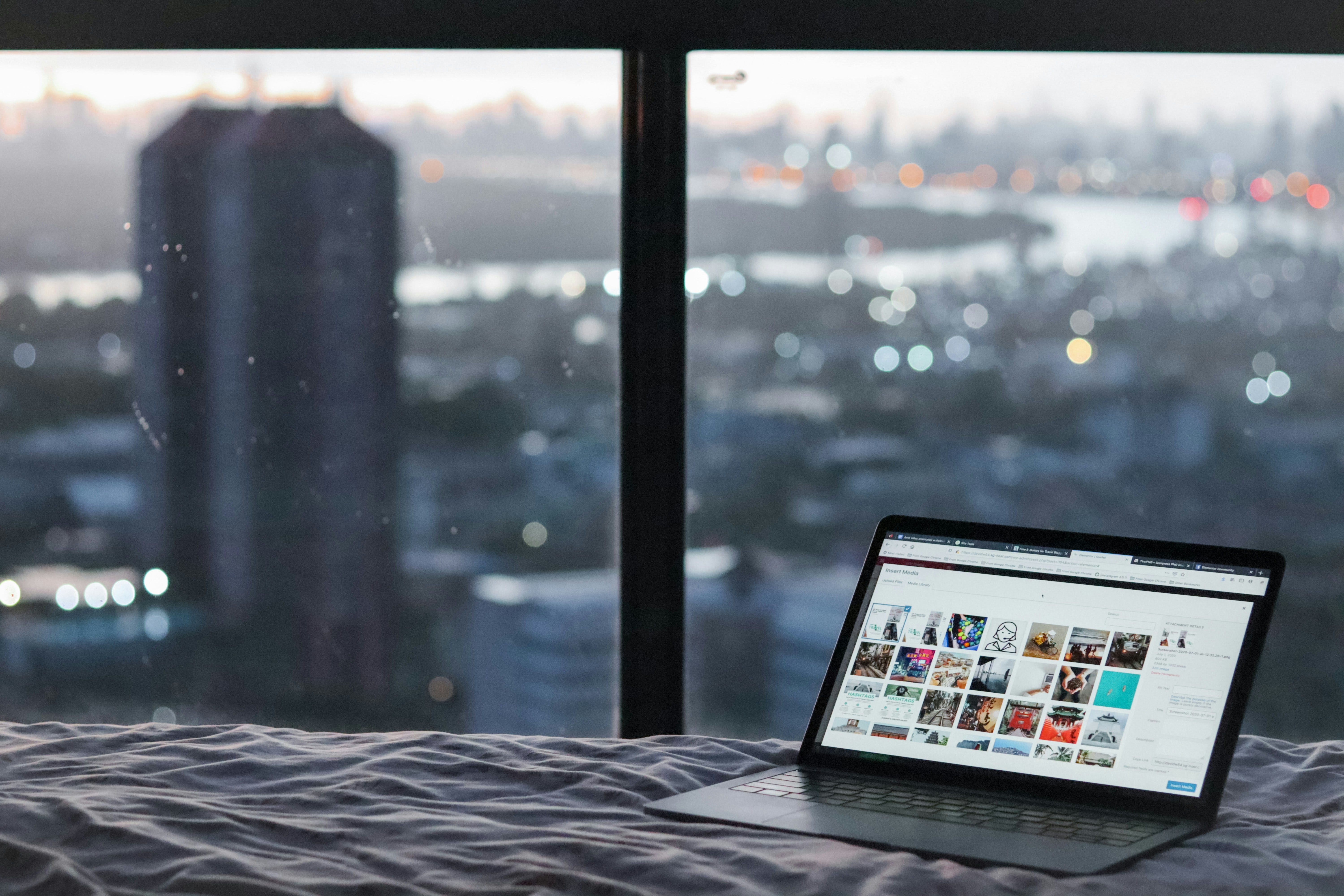
On September 28, 2012, Tim Cook, Apple’s chief executive, published a public apology for Apple Maps. Apple almost never apologized in public. Its new mapping app, which had replaced Google’s service in iOS 6, had become a small embarrassment: wrong locations, warped imagery, missing transit directions, and the unnerving feeling that an ordinary tool people had quietly built parts of their day around no longer worked. In Boston, one notorious image showed the roads onto the Zakim Bridge seeming to melt into the river. Cook did something even stranger than apologizing. He told irritated customers to try rival services while Apple fixed the mess, naming Bing, MapQuest, and Waze, the crowdsourced navigation app, in the process.
One of the most admired and self-assured companies in the world had to send its own users to competitors because it had broken the part of the future they needed.
On December 12, Google released its own Maps app for the iPhone. Jeff Huber, the Google executive overseeing the company’s local and mapping products, announced that more than 10 million people had downloaded it in less than 48 hours.
By the standards of wars, crashes, or elections, this was a tiny episode. By the standards of ordinary life, it was not tiny at all. A pocket map had become a test of competence: could the phone get you across town, find the restaurant, route you around traffic, and do it without drama? The future was being judged less by rockets and robots than by whether the object in your hand could help.
The Map in the Pocket
Google Maps was one of the rare products of the age that made life easier without asking people to perform, posture, or stare at themselves. It offered orientation. For generations, getting somewhere unfamiliar meant printouts, guesswork, asking strangers, circling the block, or simply being late. Then the map moved into the pocket and began speaking back.
The service kept widening what “a map” meant. Directions were only the beginning. Street View, first launched in 2007 and then absorbed into ordinary mobile use in the early 2010s, let users scout the world before arriving. You could inspect the storefront, check whether the hotel entrance was tucked around the side, see whether the cafe sat on the corner, or figure out whether the neighborhood looked clean, shabby, lively, or dead. The world became less abstract because you could preview it.
A lot of modern life had become more mobile, more urban, and more improvised. People were moving between apartments, airports, temporary jobs, restaurants, ride pickups, dates, errands, and unfamiliar neighborhoods. The phone map met that life halfway. Unlike the social platforms, it did not primarily ask for expression. It asked only where you were trying to go.
Usefulness became most persuasive when it turned personal. Waze gave it a rougher, more theatrical form. The Israeli navigation app, which began as FreeMap Israel, built its early maps from users driving roads and sending GPS traces back into the system. Uri Levine, one of its founders, later described how the team prepared for early investor meetings. They found out where the potential investors lived, made sure those houses were already on the Waze map, and waited for the obvious question: could the investor find his own house? When the address appeared, the crowdsourcing pitch stopped sounding abstract. The investor was not looking at a map. He was looking at his map.
The map no longer described only the world in general. It served the part of the world you needed right now: your house, your route, your restaurant, your hotel entrance, your traffic jam, your next turn. The Apple Maps failure landed so hard because that expectation had already become a quiet guarantee. People were not complaining only about a bad app. They were reacting to the loss of a basic competence. By then, many users expected the world to be searchable, navigable, and previewable on demand
The Phone as the Era’s Object
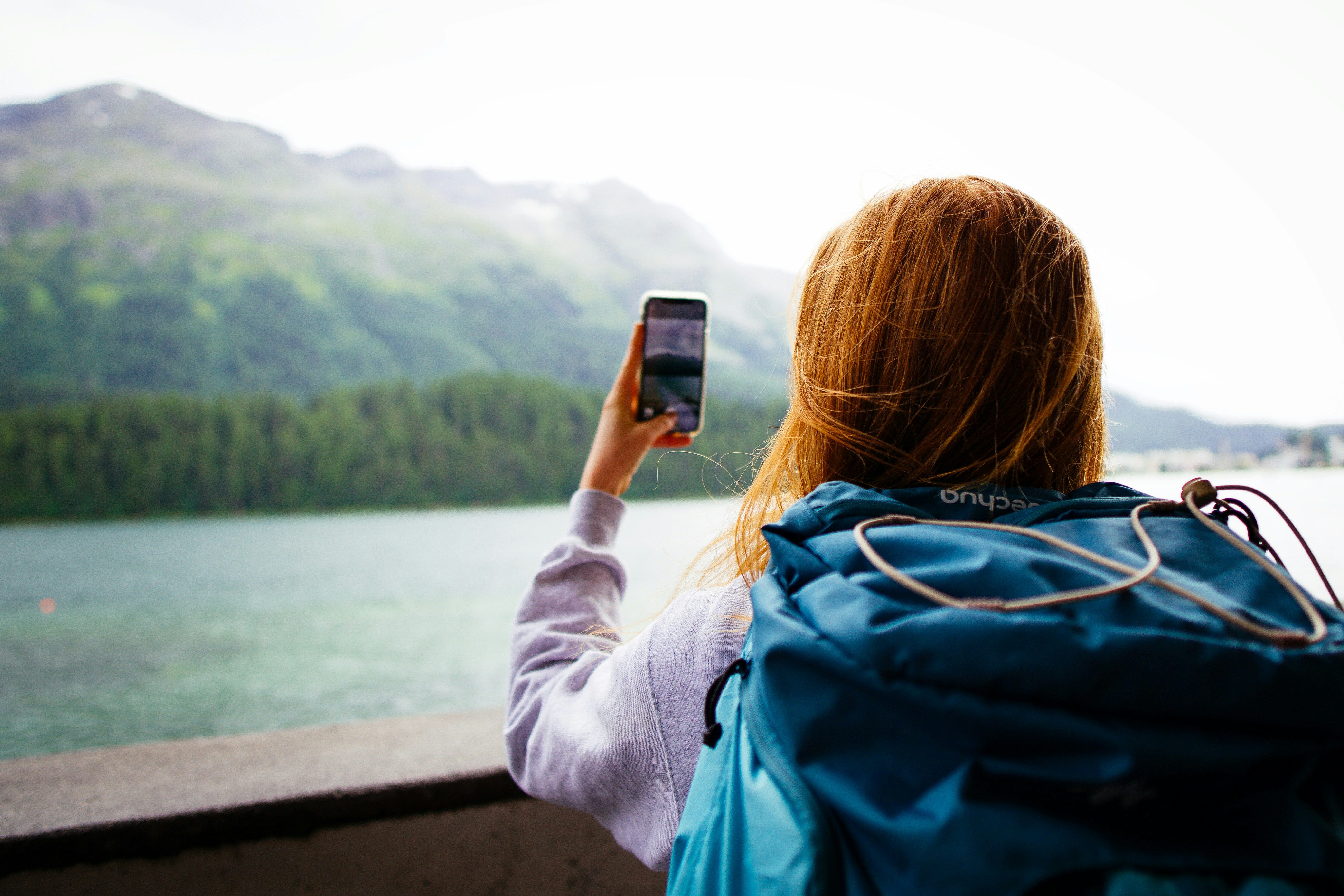
If Google Maps was one of the period’s most beloved utilities, the iPhone was its most iconic object. By the early 2010s, Apple was no longer just selling a phone. It was selling the emotional surface of the age: clean glass, smooth gestures, visible polish, and the feeling that difficulty could be designed away.
The magic of the iPhone lay partly in combination and partly in touch. It made touching glass feel strangely alive. Multi-touch let people pinch, flick, and glide instead of pecking at a tiny keyboard or poking at plastic buttons. The famous elastic scroll was part of that magic. Lists coasted, slowed, and bounced at the edge. Years later, Apple co-founder Steve Jobs said one of the earliest multi-touch demos was the moment the whole project clicked for him. Seeing the rubber-band scrolling, he remembered thinking, in effect, that a phone could be built out of this. He also liked to repeat a line from an early viewer: “You had me at scrolling.”
The motion itself carried part of the persuasion. A lot of earlier digital interfaces felt brittle, abrupt, and faintly bureaucratic. The iPhone made them feel fluid. It taught users that software could have tempo, softness, and a kind of physical grace. Even the little bounce at the bottom of a list offered a small reassurance: the machine had understood your gesture, and it had an elegant way of telling you that you had reached the end.
When Apple released the iPhone 4 in June 2010, it sold 1.7 million units in three days. Jobs sold it as a piece of industrial theater: glass, steel, sharp text, a camera people wanted to use, and FaceTime, Apple’s video-calling feature, which he presented as the old dream of video calling made ordinary. Onstage he demonstrated it by calling Jony Ive, Apple’s design chief. The stunt was simple: one elegant screen instantly reaching another.
By late October, Apple said it had sold more than 19 million FaceTime-ready iPhone 4 and iPod touch devices. New iPhone launches became one of the recurring ceremonies of the age, a strange mixture of engineering event, fashion reveal, and public mood board.
The phone also condensed other objects into itself. Camera, iPod, map, address book, browser, ticket, flashlight, and casual video recorder all started collapsing into one smooth rectangle. It held enough of daily life to make the future feel portable.
Android, the Flood
If the iPhone was the age’s object, Android was the flood that carried touch habits everywhere else. Android was Google’s mobile operating system: the software layer that let Samsung, HTC, Motorola, LG, and many other manufacturers sell phones with touchscreens, app stores, maps, notifications, cameras, and web access without building the whole system from scratch. At Google’s developer conference in June 2012, the company said Android had reached 400 million device activations and was adding another million each day. The screen grammar was moving into hundreds of millions of hands. Apple gave the era its prestige object. Android supplied the mass base.
The difference mattered. The iPhone was the device many people admired, photographed, queued for, and treated as a badge of taste. Android was what pushed the same connected grammar into cheaper handsets, more carriers, more countries, and far more hands. It spread apps, touch, maps, notifications, cameras, and constant reach well beyond the premium tier.
If Apple made the future desirable, Android made it normal. The friendly future depended on scale as much as polish. Millions of ordinary people were carrying a screen that could navigate, call, photograph, search, message, and retrieve. The basic habits of the age were stabilizing across devices. The brand differences mattered, but the deeper pattern was bigger than branding.
The Screen That Came Home
The iPad extended the same mood into the home. Apple sold 3 million units in its first 80 days. For a while, the tablet seemed like the obvious bridge between phone and laptop, a household screen for kitchens, couches, airplanes, classrooms, and children.
The tablet made computing look domestic. A screen that might once have belonged on a desk could now lie flat on a bedspread, rest against a cereal bowl, or pass from parent to child on a couch. The internet did not arrive as a terminal window or a humming office machine anymore. It arrived as tap, swipe, map, pinch, call, and play. Just as importantly, the iPad helped normalize touch as the default visual grammar of everyday life. Touchscreens spread outward through phones, tablets, kiosks, checkout systems, cars, and many of the little interfaces of daily service life. People stopped treating touch as futuristic and began treating it as obvious.
The category later settled into a smaller place than its earliest fans expected. Laptops survived and phones got bigger, but the iPad had already done its main work. It made computing feel casual, portable, and at home.
The File Leaves the Machine
Another quiet breakthrough of the period was that files stopped feeling tied to one machine. For years, ordinary computer life had been full of location anxiety. A paper might be on the office desktop, the family photos on the home computer, the presentation on a USB stick, the music on an iPod, the backup on an external drive, the wrong version in the wrong folder. The problem was not just storage capacity. It was having to remember where anything lived.
Dropbox became the friendliest face of the change. Drew Houston, one of the company’s co-founders, later wrote that the first lines of Dropbox code were sketched in Boston’s South Station while he waited for the Chinatown bus to New York and realized he had forgotten his USB drive again. The service launched in 2008 around a simple promise: your files would stay in sync and follow you.
The trick was easy to understand once you saw it. Dropbox placed an ordinary-looking folder on your computer. If you dragged a document, photo, or spreadsheet into that folder, the service quietly copied it to Dropbox’s servers and then down to your other devices. Edit the file on one machine, and the updated version appeared on another. Share a folder, and someone else could open the same material without emailing attachments back and forth. The folder still looked local, but it no longer behaved like an ordinary folder. It had become a small doorway between machines.
Dropbox reached 25 million users in April 2011 and 100 million by November 2012. At that scale, file syncing was no niche habit for obsessive early adopters. Large numbers of ordinary people had started getting used to the idea that a document could be waiting for them somewhere other than the computer in front of them.
Other companies moved quickly to make the same expectation feel normal. Apple introduced iCloud in 2011 as a way to keep music, photos, calendars, contacts, and documents updated automatically across devices. It said 20 million people had signed up within days and 85 million were using it by January 2012. Google launched Drive in April 2012 with the same reassuring premise from another angle: create, store, share, and collaborate, then open the same material from the web, your home computer, the office, or your phone. By late June, Google said more than 10 million people had already tried it.
The older vocabulary remained. Dropbox and Drive still presented documents as files, yet the relationship was loosening. It mattered less which hard drive held the material. The practical question was whether it appeared when you needed it.
Consumer cloud life was only persuasive if being online had become ordinary enough to support it. By 2013, 70 percent of American adults had high-speed broadband at home and 56 percent owned a smartphone; 80 percent had at least one of those two forms of access. The connection was not universal, and it was not equal. Still, going online was starting to feel less like a special act and more like the default condition of ordinary life. Home, work, airports, hotels, cafes, and train stations were increasingly expected to offer some path back to the network. File syncing, browser storage, and cloud collaboration were turning into mass habits, not niche tricks.
From that habit came one of the period’s most seductive abstractions. Data no longer seemed to sit in a place. It seemed to live in the internet. To engineers, of course, it still sat on real servers in real buildings. To users, it had begun to lose physical address. Digital life felt lighter, smoother, and less tied to objects. It also helped prepare the deeper habit that would define the next phase: opening an app and not caring where the underlying thing was.
Seeing People Again
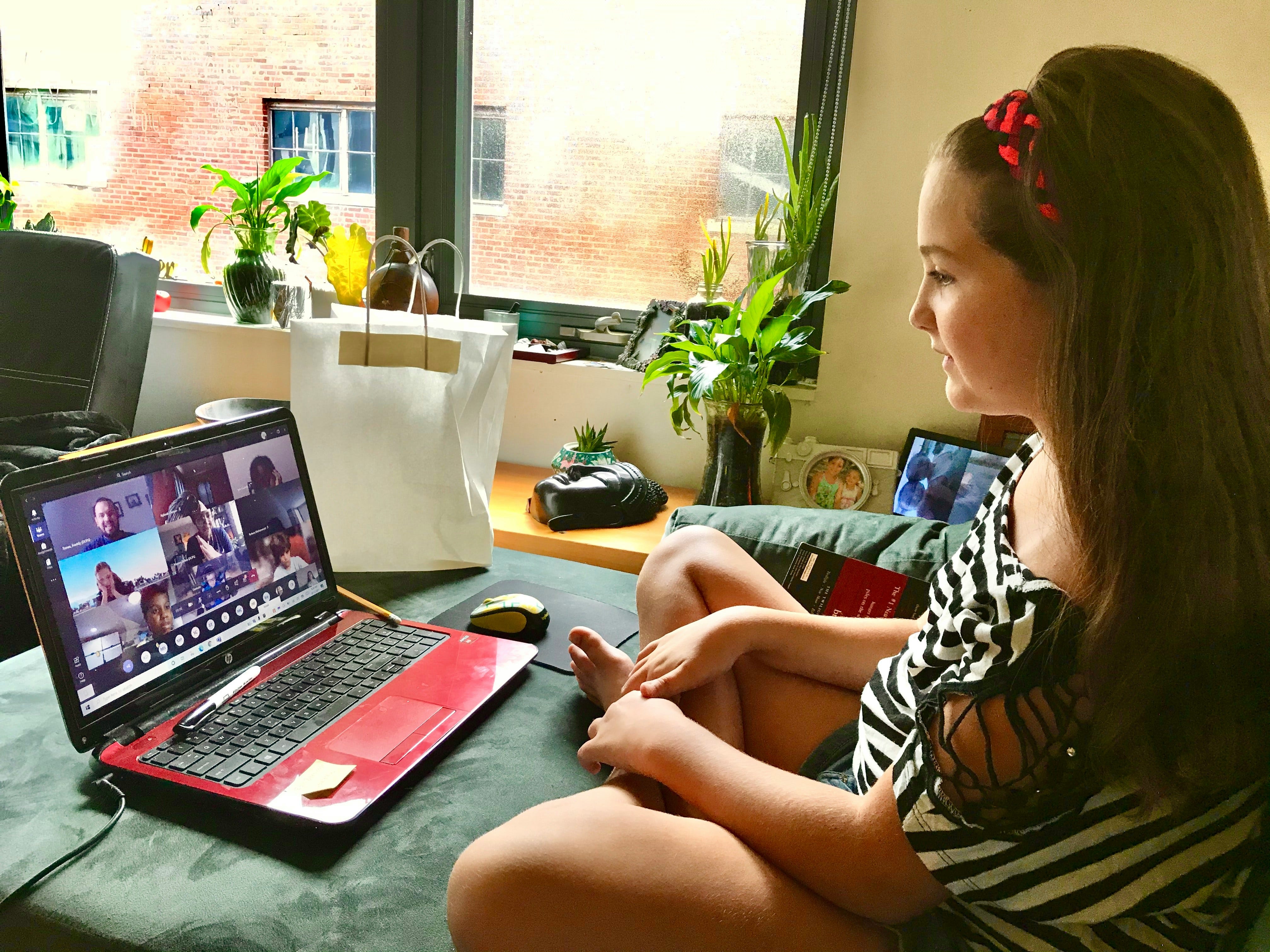
Connection softened in the same way. Skype, the internet calling service Microsoft bought for $8.5 billion in 2011, had 170 million connected users and more than 207 billion minutes of voice and video conversation in 2010. That scale meant something practical. What had once required planning, desktop computers, and long-distance charges was becoming casual.
FaceTime made video calling feel even lighter. It took something that had long belonged to science fiction and office equipment and made it behave like a household reflex. You tapped a name and a face appeared. A parent traveling for work could call from a hotel room. A grandparent could see a child instead of merely hearing a voice. An emigrant could speak to family without first calculating the bill.
Video calling did not solve loneliness, migration, or distance. It changed how distance felt. Separation became more survivable because contact became more immediate and less ceremonious.
When Television Left the Schedule
Netflix changed film and television first. It had already spent years teaching people to expect entertainment on demand, first through its red DVD envelopes in the mail and then through the Instant Queue, the early streaming watchlist. Streaming made the promise more immediate. Instead of waiting for a disc or turning to a channel at the right hour, a subscriber opened a menu of available films and shows, chose one, and pressed play. The shift changed more than convenience. It changed rhythm. A show no longer belonged to the broadcaster’s schedule. It belonged to your evening.
Television had long required obedience to timing: tonight, next week, same hour, same channel. Streaming loosened that discipline. In early 2012, Netflix said its 20 million members had streamed more than 2 billion hours of television and movies in the previous quarter. That scale was one sign that the old timetable was weakening.
In 2013, Netflix pushed the logic further with `House of Cards`, releasing all 13 episodes at once instead of making viewers wait week by week. The decision looked almost rude by older television standards. It also made perfect sense. The service had trained people to expect access over schedule. Now it was training them to expect the season itself as a single object. A person no longer needed to shape the evening around the broadcaster’s timetable. The next episode no longer arrived as an appointment. It sat waiting for you.
When Music Left the Shelf
Spotify told a different story. When it reached the United States in 2011, it offered a cleaner answer to the messy afterlife of piracy and MP3 accumulation, years of compressed digital music files scattered across hard drives, folders, and iPods. The music problem of the 2000s had not been scarcity. It had been clutter. Libraries became disorganized. Files had to be found, tagged, synced, backed up, and moved across devices.
It also arrived with a strangely clubby edge. Spotify’s American launch began with an invite-only free tier, which gave the service a little aura of scarcity even though its deeper promise was abundance. You were not buying a jewel case. You were being admitted into a library.
Spotify offered a different proposition: stop managing the collection. Enter the collection.
By mid-2012, the service said it had more than 15 million active users and 4 million paying subscribers. By December, those figures had climbed to 20 million and 5 million. The numbers also marked a change in the emotional relationship to music. Instead of deciding what belonged permanently on a hard drive, users could begin to treat the song as instantly retrievable rather than personally stored.
If Netflix weakened the schedule, Spotify weakened the shelf.
The shift fit the period perfectly. Ownership gave way to access. Curation did not disappear, but it became lighter, more fluid, more playlist-like. Music followed you into headphones, cars, offices, gyms, and walks without demanding that you maintain a personal archive like a small librarian.
The numbers mattered, but the feeling mattered more. Media no longer sat in shelves, jewel cases, plastic boxes, or waiting schedules. It followed you. Music moved into the headphones in your pocket. Film and television moved onto the tablet in bed, the laptop on the couch, the phone in transit. Friends could appear on a screen without planning around international calling cards or family desktops. It became easier to hear, watch, call, find, carry, and retrieve.
The Future in Consumer Packaging
The more futuristic layer of the period arrived in the same spirit. It did not usually present itself as heavy industry or grim corporate futurism. It arrived in elegant packaging, startup language, and objects ordinary people could imagine touching.
At the glamorous edge of the mood stood Elon Musk, the entrepreneur behind Tesla and SpaceX, whose two companies helped turn futurism back into a public spectacle. In June 2012, Tesla handed the first Model S sedans to customers at an invitation-only event at its factory in Fremont, California. A few months later the car won Motor Trend’s 2013 Car of the Year by unanimous vote, making the electric car look like luxury and speed rather than sacrifice. Its giant central touchscreen made the cabin feel less like traditional Detroit machinery and more like consumer electronics on wheels. The car did not sell ecological modesty. It sold glamour, torque, and interface prestige.
In October 2012, SpaceX carried out NASA’s first contracted cargo delivery mission to the International Space Station under a $1.6 billion resupply contract. Private rocketry no longer looked only like a billionaire fantasy. It had a launch date, a customer, and a destination.
Below that glamorous edge, old science-fiction objects were becoming retail products and weekend demos. In January 2013, DJI, the drone manufacturer, introduced the Phantom, calling it the industry’s first ready-to-fly consumer quadcopter. It cost $679, included GPS-based autopilot, and came with a GoPro mount so ordinary buyers could imagine themselves making aerial cinema without soldering parts together in a garage first.
GoPro, the action-camera company, belonged to the same world, but with a stronger human story behind it. Nick Woodman, the company’s founder, had first wanted something simple: a way for surfers to capture themselves riding waves without needing a photographer in the water or on the beach. The idea grew out of a surfing trip through Australia and Indonesia in the early 2000s. He began with straps and makeshift rigs before realizing he would have to build the whole camera system himself. By 2014, GoPro shipped 5.2 million cameras in a single year. It was selling more than hardware. It was selling a portable fantasy of intensified life: surf, snow, jump, climb, attach, upload. The company’s slogan, `Be a Hero`, captured the appeal almost too neatly: ordinary weekends filmed in the visual language of action-sports television.
A person did not need to understand robotics, battery chemistry, orbital logistics, or camera engineering. It was enough to buy the object, hold it, launch it, or watch the demo and feel that the future had become consumer-friendly.
A Polite House
Even the home was reimagined in this mood. While planning an energy-efficient house, Tony Fadell, the former Apple executive who had helped build the iPod and the iPhone, became irritated by the thermostats already on the market. They were ugly, fiddly, and stupid. When he told his wife he wanted to start a company to build a thermostat, her response, according to Wired, was: “You’re going to build a what?”
Thermostats had long belonged to the class of objects people tolerated rather than admired. When Fadell introduced the Nest Learning Thermostat in 2011, he described it as a thermostat for the iPhone generation. The phrase was almost too perfect. Nest turned a forgettable wall fixture into a stainless-steel disc with a clean display, a simple dial, and an app.
The sales pitch was practical enough: save money, save energy, learn your habits, change the temperature from your phone. The appeal was also aesthetic and emotional. The future in the home was not supposed to look industrial. It was supposed to look calm, smooth, and faintly inevitable. Nest promised control, but it also promised relief from the petty irritation of badly designed objects.
Other products quickly started speaking the same language. In late 2012, Philips launched Hue, the app-controlled lighting system sold first through Apple stores, with a starter pack of three bulbs and a bridge for about $199. The premise was slightly absurd and deeply of its time: even the light bulb now wanted to become a lifestyle interface. People were being asked to think of lighting not as background utility, but as a customizable mood layer managed from the same phone that already handled messages, music, and maps.
In January 2014, Google agreed to buy Nest for $3.2 billion. Even the thermostat had become part of the interface business.
Consumer futurism became mainstream again, but not in the old science-fiction register. It came in a softer, cleaner, startup idiom: electric, app-controlled, personalized, automated, on-demand, sustainable-looking, beautifully packaged. The dominant image was not giant infrastructure, national power, or collective destiny. It was a better user experience.
When It Still Felt Like Help
For a stretch of years, the future arrived as assistance. Its most persuasive achievements were not grand ideological visions or theatrical displays of machine intelligence. They were smaller, steadier, and closer to the hand. A map that could guide you through a strange city. A phone that collapsed half a dozen tools into one object. A television library that obeyed your evening instead of the broadcaster’s timetable. A music service that freed you from managing files. A screen that let distance feel less final.
The period could feel light. The technology people loved most did not demand reverence. It removed friction. It saved time. It lowered intimidation. It made the world look more reachable and daily life more manageable. For a few years, the most convincing image of the future was not the machine that ruled you or the robot that replaced you. It was the service that quietly helped you get on with the day.