
05. One Screen
How one device absorbed the pocket, reorganized daily life, and carried the world inside it.

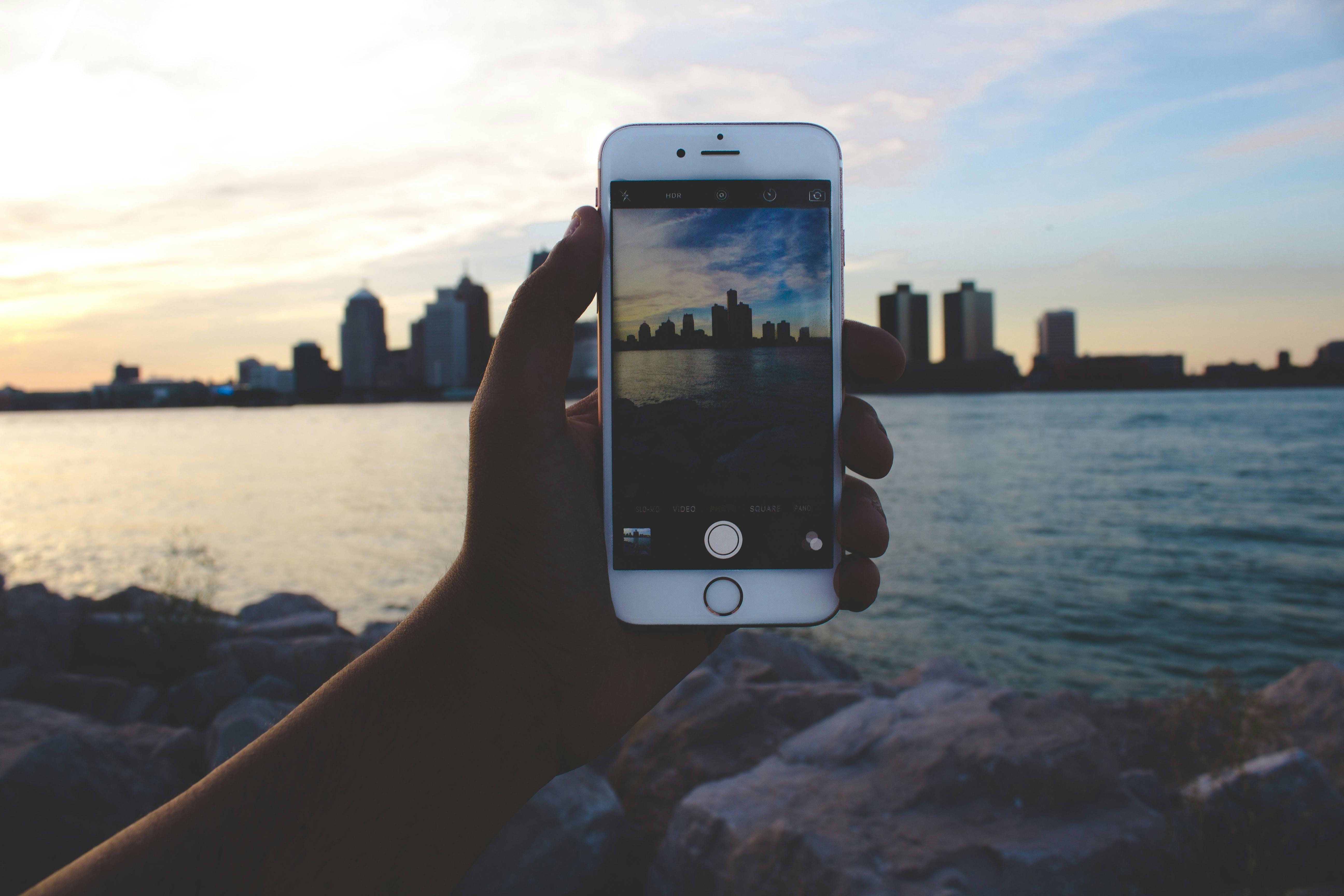
In December 2011 Amazon asked shoppers to bring its store into someone else's aisle. For one Saturday, a customer could stand inside a regular physical store, open Amazon's Price Check app, and look up the product on Amazon instead. The app let shoppers scan a barcode, snap a picture, or say or type a product name. It returned the Amazon price, reviews, and the option to order the thing for delivery. If the customer later bought from Amazon, the company offered a small discount.
Retailers had a reason to hate it. Their stores still supplied the lights, shelves, staff, and physical goods. Amazon supplied the comparison and the checkout at the decisive moment. Before buying the thing in front of you, the phone suggested, check the same thing on Amazon. A sale could begin in a store and finish somewhere else.
Retail had acquired a new little indignity: showrooming, when the shop provided the display and another company took the order. Amazon had not invented the habit, but Price Check made the change unusually easy to see.
The new behavior came from the way the phone joined abilities that had once belonged to separate tools and places. The camera could recognize the product. The connection could pull up Amazon's catalog. The screen could show the price and reviews. The account system could complete the purchase. The physical shelf became the starting point for a remote transaction.
The smartphone's deeper advantage was mundane and powerful: people already had it with them. A dedicated price-checking machine would have been too narrow for most people to carry. On the smartphone, the hardware was already in the hand, and the front panel could redraw itself for the task. In one moment it could be a camera view; in the next, a product page, review list, and checkout button. The same pane could match the task in front of it without asking anyone to carry another specialized object.
The phone had also shed many of its keys, textures, and visible controls. It presented itself as a smooth illuminated pane. Once the object looked calm enough, neutral enough, and flexible enough, more jobs could be asked of it.
The Device That Ate the Pocket
The adoption curve still looks abrupt. In five years, smartphone ownership among American adults moved from roughly a third of the country to more than three quarters. The device went from a relatively affluent or enthusiast object to a normal adult possession.
The raw adoption number does not explain the shift. The handset was no longer waiting for one job. It was becoming routine equipment for many small jobs.
A one-screen life needed one unglamorous requirement: the device had to last long enough to be trusted. Endurance came from many small advances moving together rather than from one dramatic breakthrough. Some companies made battery life the sales pitch, as Motorola did with the Droid RAZR MAXX. Others balanced large screens, removable cells, and display efficiency, as Samsung did across the Galaxy line. Chipmakers changed the interior: smaller processors, integrated radios, power-aware cores, and better sleep states. Android later attacked the background drain, delaying network and processor activity when a phone sat idle. The battery cell was one part of a larger discipline: chips, radios, screens, sensors, and software learning when to wake, sleep, dim, connect, and wait. Phones still died, sometimes annoyingly. By the middle of the decade, though, it had become plausible to lean on one device from morning errands to the last idle check before bed.
Once the device could be trusted for ordinary stretches of the day, the rest of the pocket began to change. Replacement came unevenly. Small personal objects felt optional first: the camera, the music player, the pocket diary, the ticket folder. Then came small acts of orientation and hesitation. A road atlas became a glowing route. A scribbled address became a pin.
The camera gives the cleanest example. Global digital-camera shipments peaked around 2010 and then fell sharply. Millions of people discovered that the best camera was no longer necessarily the best camera. It was the camera already in the hand, already connected, already able to send the image onward.
The map followed. By the early 2010s, most adult smartphone owners were using the phone for directions or location-based information. A map was no longer something you consulted before entering the city. It traveled with you. Drivers no longer needed to leave home with printed directions. Pedestrians no longer needed to memorize the neighborhood first. The possibility of being lost became less final.
The wallet began to give way at the edges. Google Wallet went public as an early tap-to-pay app, limited at first to a narrow set of phones and payment partners. Apple moved from a different angle with Passbook, a place for boarding passes, movie tickets, store cards, coupons, and gift balances. A travel day no longer had to live in a folder. If a gate changed at the airport, the device could tell you. Payment and identification would take longer to move fully inward, but tickets, loyalty cards, and access tokens were already being pulled onto the same screen.
The notebook and diary dissolved more quietly. No one held a public funeral for the pocket calendar or the little paper address book. They simply stopped being the first place many people put things. Notes, calendars, message threads, screenshots, and the camera roll formed a new kind of casual memory. The phone stored appointments, and it also stored fragments of ordinary life in progress.
The Phone Arrives First
Portability was only the beginning. In richer countries, the phone first had to stop leaning on the older computer. Android had already made wireless software updates part of phone life. Apple's iOS 5 made the same break visible inside the iPhone world with a feature called PC Free: people could activate and update an iPhone or iPad without plugging into a computer. The cable to the parent machine was being cut.
Even in the United States, that change did not mean the same thing for everyone. By the middle of the decade, researchers had a name for people with few good ways to get online besides the phone: smartphone-dependent. Many had gone through stretches when service was cut off or canceled. The device was becoming most indispensable for people whose access to it was often the least secure.
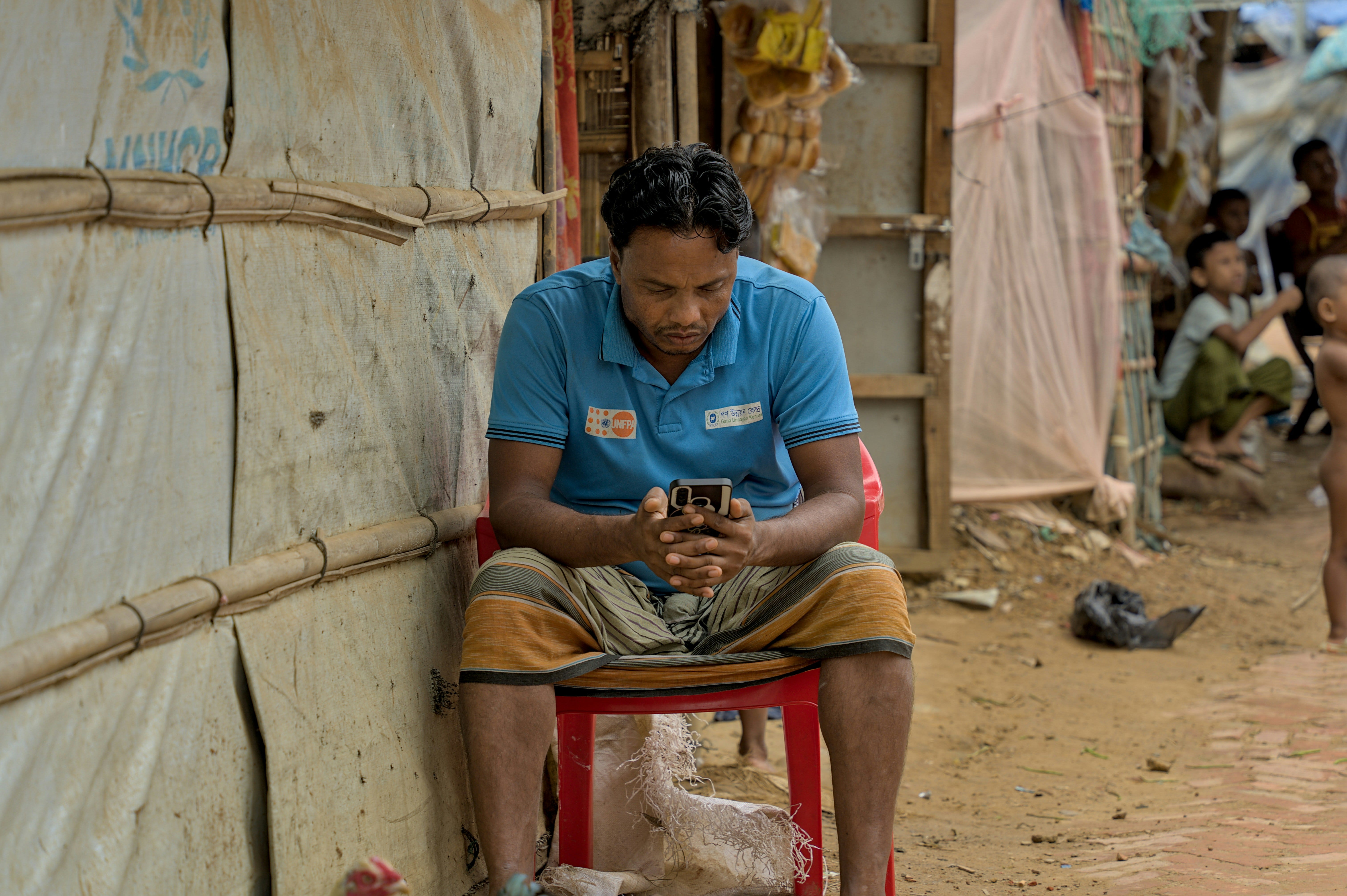
Elsewhere, there was often no older computer to break away from. The phone arrived out of order. In developing countries, mobile phones had spread farther than household electricity or clean water. Among the poorest households, they were more common than improved toilets or electricity at home. By 2012, the mobile industry estimated that hundreds of millions of mobile users in emerging markets lived beyond the electric grid. People charged handsets where they could: at solar kiosks, through neighbors, from small paid charging shops.
In remote parts of Madagascar, villages reached by new communications towers still had no roads, hospitals, banks, or electricity at home. There, the phone did not improve an old routine. It opened one. People could call family in an emergency, ask for medical help, send money, check crop prices, and reach information that once required costly travel or days on foot. Some teachers no longer had to walk to collect their paychecks; mobile banking could bring the money closer instead. Nearly half the people living near those new towers still lacked electricity at home. The signal had arrived before the full modern household bundle.
Near Alwar in Rajasthan, the same leap arrived on a bicycle cart. A thirty-two-year-old woman named Sheetal had once been told by her husband not to touch the family mobile phone because she might spoil it. A few months later, she was working with Internet Saathi, a digital-literacy program from Google India and Tata Trusts. She rode through cotton and onion fields with connected phones and tablets, teaching other women to search online, install messaging apps, and use the web in their own language.
The women around her were not moving from desktop to mobile. Some had not had television at home. At first, the tablet opened places and people they had only heard about: a national leader, Mecca, the Taj Mahal. Then the search box turned practical. Women checked onion prices before selling to a middleman, downloaded exam papers for their children, looked up government benefits, found train routes and hospital locations. The connected screen arrived as something to share, borrow, learn, and eventually claim.
The phone did not only open information. It also opened institutions. Kenya's M-Pesa, launched commercially in 2007 by Safaricom, the country's dominant mobile operator, did not require a smartphone. It ran through basic phones and local agents. Before services like this, an urban worker who wanted to support family in the countryside might travel home with cash, ask a friend to carry it, or hand it to a bus driver. With M-Pesa, the worker could register at a shop, hand over cash, turn it into electronic balance, send it to another phone number, and let the recipient cash out with another agent. The phone identified the account and carried the instruction. The shop or kiosk handled the cash.
That change reached beyond remittances. Bills, school fees, benefits, savings, and eventually credit could move through the same simple handset. In several African countries, mobile-money accounts became more common than bank accounts. For many users and their families, it was their first access to basic financial services.
Messages, Photos, Selves
The phone also absorbed more intimate territory. It became the ordinary device through which people checked whether they were being answered, noticed, wanted, or ignored.
Messaging sat near the center of that change. When Facebook announced its acquisition of WhatsApp, the messaging service already had hundreds of millions of monthly users and message volume approaching the total volume of traditional carrier text messages worldwide. The cellular handset had begun as a voice device. Now one of the most valuable things it carried was a service built to route around the older carrier text-message system.
WhatsApp's power began with a plain cost problem. Jan Koum, the company's Ukrainian-born co-founder, had lived the immigrant version of expensive long-distance contact. Across Europe, India, Latin America, Africa, and migrant life everywhere, the service became the family thread, the school-parent channel, and the cheap international workaround. Cross-border intimacy became easier to maintain because it fit into the same object people already carried.
The camera and the social mirror fused too. Instagram was built for the phone: take a picture, filter it, post it, wait for attention. The camera was no longer merely inside the handset. The whole social loop was there with it: image, edit, caption, audience, reaction. A quick look at your own face could become a picture, a post, and a request for reaction. The mirror became networked.
Dating moved onto the phone too. Tinder, launched in 2012, made strangers appear as a stack of faces on the same device that handled maps and messages. The possible pool widened beyond friends, classmates, coworkers, and chance encounters. The search field felt almost bottomless, and the first pass became fast and visual. One thumb could now begin what earlier social life had spread across bars, campuses, introductions, and slower forms of repeated contact.
It made less sense to describe the smartphone as a communications device and stop there. Practical need and idle time kept colliding. The phone could settle a question and then immediately offer something to scroll while waiting. Urgency and boredom moved into the same pocket. So did dependence. People were already reporting moments when life became harder because the phone was not with them, or easier to escape because it was.
The World Inside the Phone
The object that felt most personal in the pocket was one of the least local things people owned.
Apple printed the neat version on the back of the iPhone: designed in California, assembled in China. The line was true, but only as a label on a suitcase is true. It named where the trip began and where the bag was closed. It left out most of the journey.
Before a phone reached a factory, some of it had already passed through mines. Rechargeable batteries needed cobalt, much of it from the Democratic Republic of the Congo. Circuit boards and other components drew on tin, tantalum, tungsten, and gold, the minerals that electronics companies were by then being pressed to trace more carefully through supply chains stretching across Central Africa and beyond. The phone's glassy calm began in places that looked nothing like an Apple Store: ore, pits, smelters, chemical processing, freight.
The processor carried another map inside it. Much of the smartphone world rested on ARM, the Cambridge-born chip-design company whose low-power architecture was suited to devices that had to compute hard without exhausting a small battery. A company such as Apple or Qualcomm could design a chip around that logic, but design was not fabrication. Samsung made several early Apple A-series processors. By the middle of the decade, Taiwan's TSMC had become one of the essential foundries of the mobile age, manufacturing advanced chips for firms that designed more than they built.
Even the foundries depended on firms most buyers had never heard of. The chipmaking machines were feats in themselves. Companies such as ASML in the Netherlands and Nikon in Japan built room-sized systems of light, lenses, motors, and sensors that placed microscopic patterns onto silicon with precision measured in fractions of a nanometer. They were among the most exact machines humans had made, and the mobile processor depended on them long before the finished phone looked effortless in the hand.
Other specialists filled out the chain. Qualcomm in San Diego supplied modems and wireless expertise. Across Europe, less visible suppliers made sensors, power parts, radio components, and other pieces that rarely became part of the phone's public mythology.
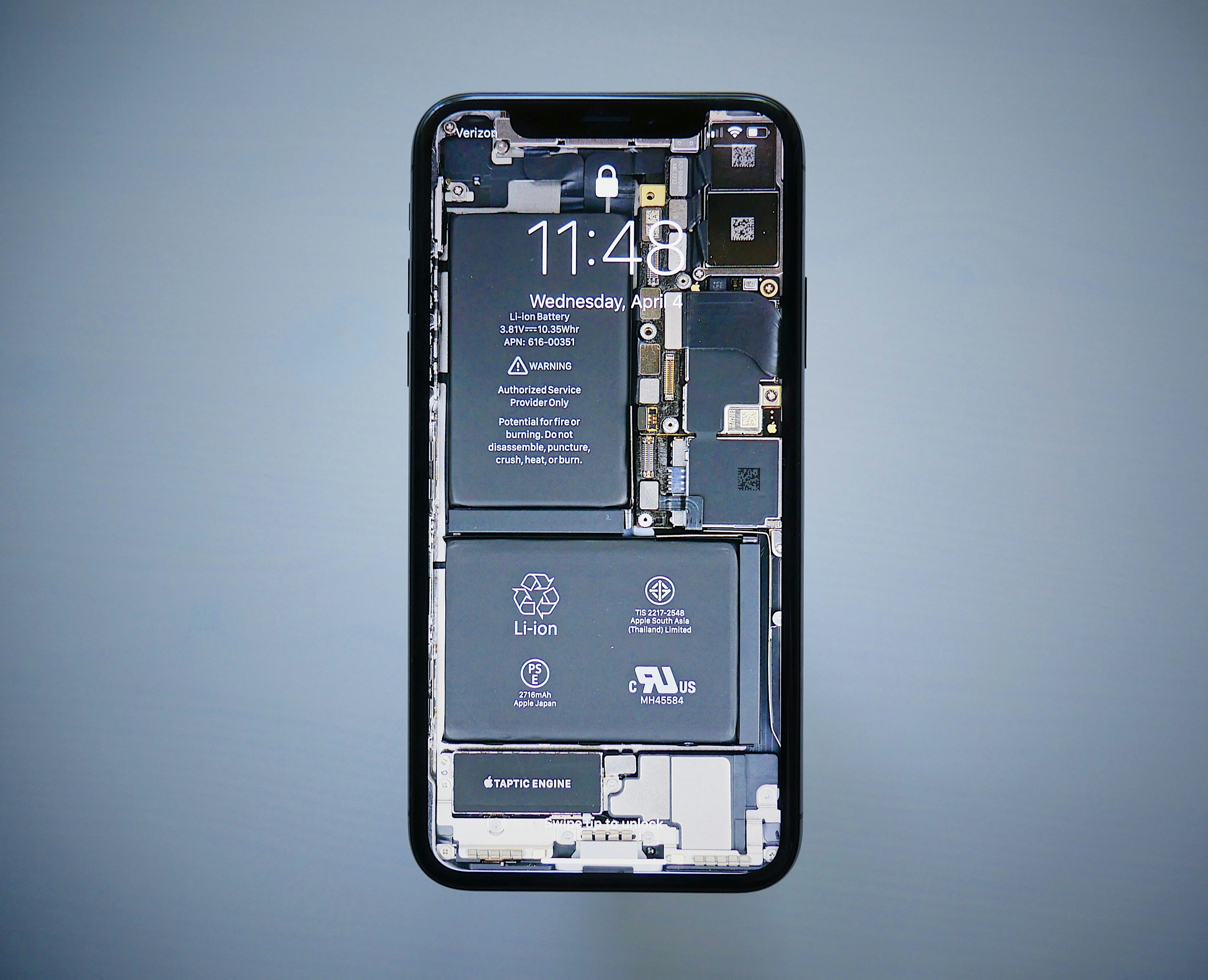
Open one handset and the abstraction turned physical. A teardown of the iPhone 6 showed an Apple-designed processor, SK Hynix memory, Qualcomm modem parts, Murata Wi-Fi, Broadcom touch controls, InvenSense motion sensors, and other components crowded together under the glass. Corning in New York made the strengthened cover material associated with premium smartphones. Sony became a major supplier of image sensors. Samsung and other Korean firms supplied displays and memory. The phone looked like one object because enormous specialization had been made to meet inside a few millimeters.
China entered the story most visibly at the point where all of this became a finished product. When Tim Cook, Apple's chief executive and former operations chief, visited Foxconn's Zhengzhou plant in 2012, the complex employed about 120,000 workers. Apple was under heavy pressure over labor practices, and Foxconn had already become globally associated with worker suicides. The immaculate device in the user's hand had passed through a crowded industrial world before it reached the pocket.
The iPhone supplied the prestige image, but it was not the only global story. Android carried the spread. Google's mobile operating system could run across luxury flagships, prepaid handsets, local brands, export phones, and devices built for people who had no reason to wait for Apple's ideal form of modernity. The mass market did not need one perfect phone. It needed many phones fitted to many kinds of life.
In India, Google's Android One program joined phone and chip partners around reference designs for cheaper devices with dual SIM cards, replaceable batteries, FM radio, expandable storage, and software updates. Chinese and Chinese-linked brands pushed the same logic further. Xiaomi, Lenovo, Oppo, and Vivo competed aggressively in India. In Africa, Transsion's Tecno, itel, and Infinix brands became important because they treated low price as only one part of the problem. Phones needed long battery life where electricity was unreliable, several SIM slots where people juggled carriers, local-language support, repair networks, and cameras that handled darker skin well.
By the end of the period, Android accounted for roughly nine out of ten global smartphone shipments. China and India had become the two largest smartphone markets. The center of gravity had moved far beyond California. The phone that looked most like California's gift to the world had been built by the world, and the next users were not waiting for California to decide what a useful phone should be.
Life Through One Screen
By the middle of the decade, the phone was no longer only the place where more life could happen. It was becoming the place where more life was expected to happen.
That expectation grew out of everything the device had already absorbed. It was camera, map, ticket folder, message terminal, search box, wallet edge, music player, and social feed in one object. Businesses without a mobile path began to look unfinished. Services that still required a printer or desktop began to look old. A map without live location felt primitive. Tickets that could not appear on the lock screen felt inconvenient.
Important tasks were moving there too. By 2015, Americans were already using smartphones for health information, school material, job searches, applications, directions, and government services. For people with few other good ways to get online, the phone was often the route through which modern institutions could be reached at all.
Older media reorganized themselves around the same object. A newspaper might first appear as a push alert, a shared link, or a headline glimpsed between messages. Radio remained radio, yet music, talk, and podcast listening migrated into the pocket. Television still dominated the living room, while the phone invaded the couch, filling commercial breaks, carrying second-screen commentary, and starting to replace the remote. One of the central social systems of the period moved there too: by the middle of the decade, hundreds of millions of people used Facebook only on mobile devices.
Work followed the same path. The office did not fit gracefully on the small screen. Its demand to reach you anyway fit perfectly. Email, calendars, approvals, group chats, files, and alerts no longer had to wait for the desk. The workday could follow people onto the train, into the kitchen, and back into bed.
Once that much life had been drawn into the handset, convenience hardened into expectation. Other people and institutions began to assume that the phone was where you could be reached, informed, verified, and made to act.
The social habits changed around that assumption. The downward glance became a common way to leave the room without physically leaving it. Surveys were already finding people using the phone to avoid interaction, especially among younger adults. Add headphones and the retreat could become nearly total: a private soundtrack, a private thread, a private scroll, all running in public. The same partial absence spread onto sidewalks and into cars, where distracted-driving deaths and headphone-related pedestrian injuries had become visible concerns.
The device had begun as one tool among many. By the middle of the decade, it was becoming the access point through which ordinary life increasingly expected to find you.
This chapter is part of “Obama Era”, a book-in-progress about the culture, technology, politics, and hidden fractures of 2008–2016.
Read the full chapter list here: Table of Contents
Previous: Chapter 04. The Pure Content Window
Next: Chapter 06. There’s an App for That